
How Baggy Is Too Baggy? Finding Your Perfect Loose Fit
There’s a moment in the fitting room where you can’t tell if the jeans look relaxed or like you borrowed them from someone twice your size. That line moves depending on your height, your top, and even the shoes on your feet, which is why so many people give up on baggy denim after one bad try.
How baggy is too baggy isn’t really about a number on the tag, it’s about where the fabric sits and how much of it is doing nothing but hanging there. Some silhouettes are meant to swallow your shape on purpose, others just look like a fit mistake. The difference usually comes down to two or three small details, not a full wardrobe overhaul. Once you know what to check, you can tell in about ten seconds whether a pair is going to work for you or sit in the back of your closet. Here’s how to read the fit before you buy, and how to fix it after.
Check the Waistband Gap Before Anything Else
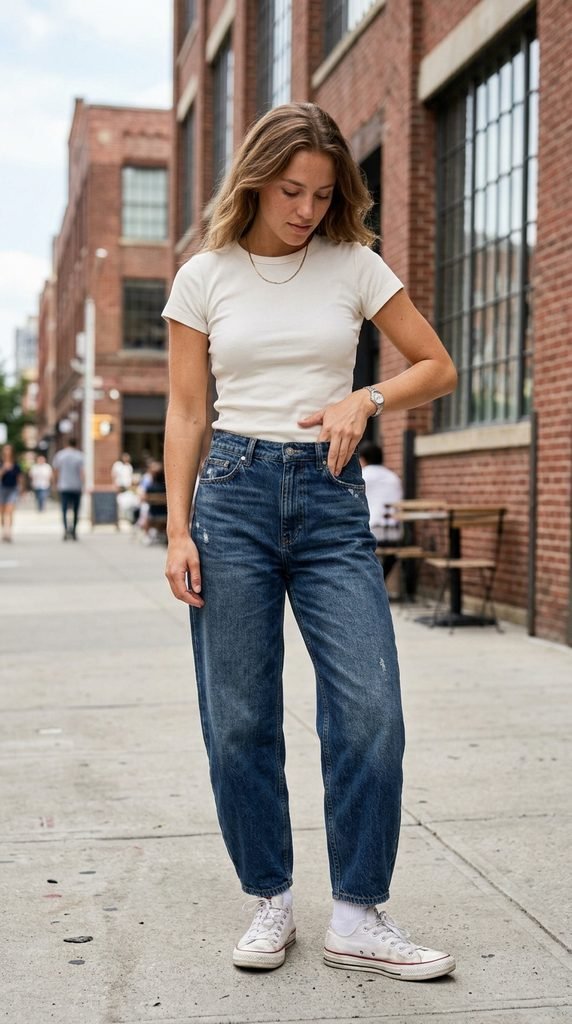
Slide two fingers into the waistband while standing straight. If there’s room for a full fist, the waist is too loose no matter how good the legs look. A loose waist is the detail that ruins baggy jeans fastest, because it shifts every time you sit or reach for something.
💡 Quick Tip
Two fingers should fit snugly at the waistband. Anything looser and the jean will need a belt to stay put through the day.
The legs can be as wide as you want, the waist is the part that actually has to fit your body.
Watch Where the Crotch Seam Sits When You Walk
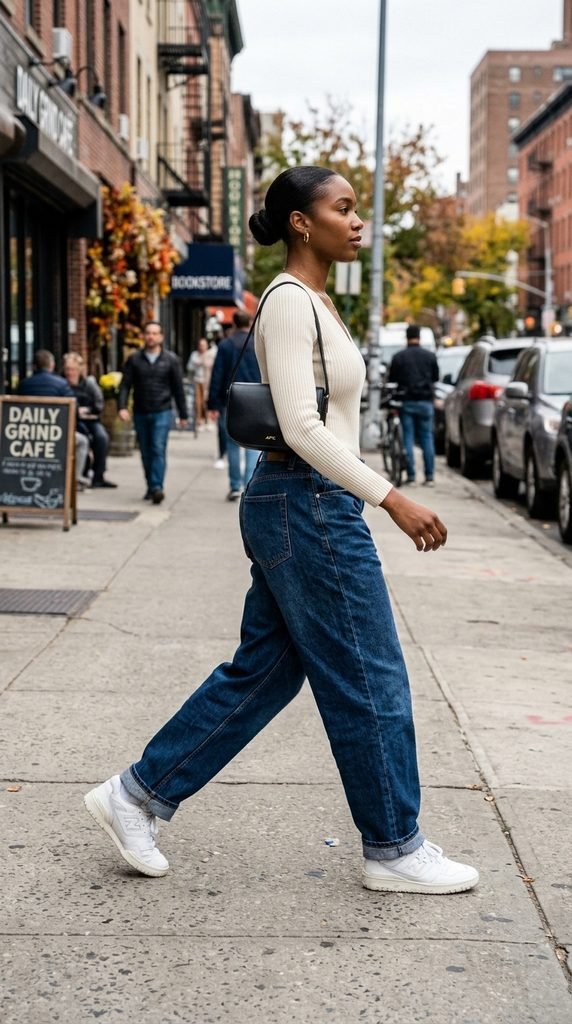
A dropped crotch is part of the baggy look on purpose, but there’s a limit. Once the seam hangs low enough to bunch between your legs when you walk, the fit has crossed from relaxed into ill fitting, and no amount of styling fixes that while you’re moving.
Seam drops several inches and bunches with each step.
A slight drop with a clean line while walking or sitting.
Walk a few steps in the fitting room mirror before deciding, standing still hides this problem completely.
The Hem Should Break Once, Not Pool Into a Puddle
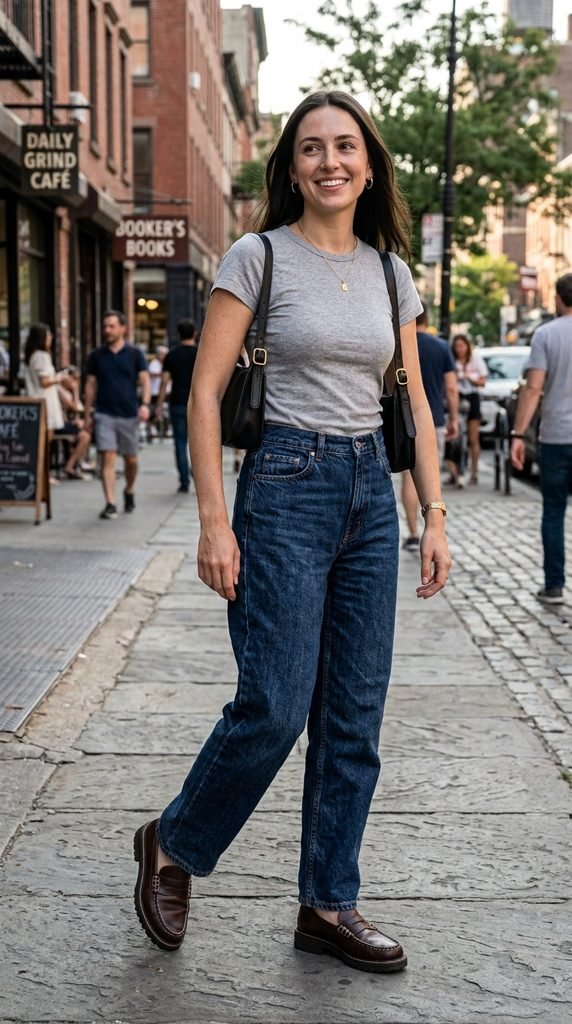
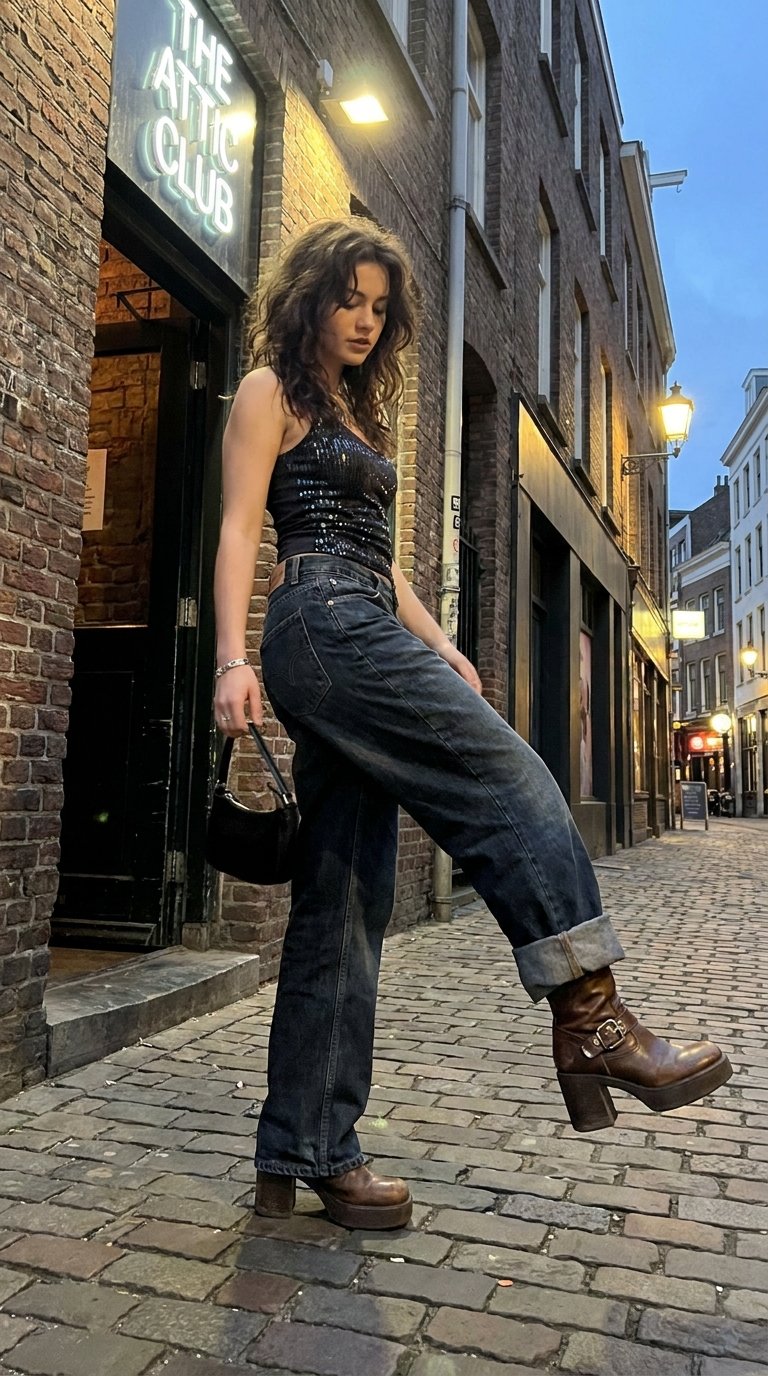
One clean break at the top of your shoe reads as an intentional wide leg. A full puddle of extra denim collecting on the floor reads as a jean that’s simply too long. This is the single easiest fix on the whole list, and a tailor can do it in a week.
Put on the shoes you’ll actually wear with the jeans.
Mark where the denim first touches the top of the shoe.
Hem there, or cuff once if you’d rather not alter them.
Bring the exact shoes to your tailor appointment, hem length changes completely with heel height.
A Baggy Bottom Needs a Fitted Top to Read as Styled

Loose jeans with a loose top erase your shape entirely and just look like extra fabric from every angle. This is where a lot of baggy outfits fail, and it has nothing to do with the jeans themselves. This fitted top and baggy bottom breakdown explains why the pairing works every time.
Tuck a fitted tee or tank to define your waist.
Pairing an oversized hoodie with an already wide leg.
One fitted piece is enough, you don’t need to tuck and cinch every layer.
Rigid Denim Holds Its Shape, Soft Denim Just Collapses

Fabric weight changes how baggy actually reads on the body. A rigid, heavier denim holds a wide leg’s structure and looks intentional even at full volume. A soft, stretchy denim in the same cut collapses inward and reads more like it just doesn’t fit. This roundup of baggy jeans outfit ideas shows both fabric weights in action.
| Rigid Denim | Soft Stretch Denim |
|---|---|
| Holds a wide leg’s shape all day | Collapses and clings by afternoon |
| Reads as structured and intentional | Can read as simply too big |
Feel the fabric before you buy, a stiffer denim is doing more work than the cut itself.
Super Baggy Cuts Work Best on a Taller Frame

I’ve noticed the most oversized cuts, the ones with a dramatic drop and a wide leg from hip to hem, tend to overwhelm a shorter frame no matter how the top is styled. Height gives that extra fabric room to fall instead of pooling into a solid block of denim. This guide to styling baggy jeans when you’re short has the exact adjustments to make.
Try a high rise if you’re petite, it shortens the amount of leg the extra fabric has to cover.
Don’t Assume Your Usual Size Is Still Correct
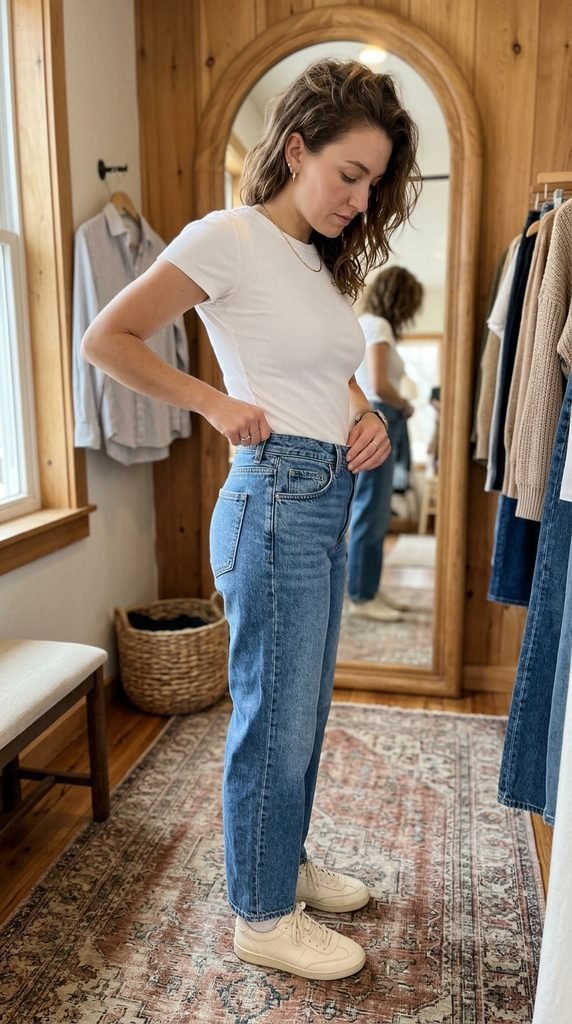
Baggy cuts are drafted with more room built in, so your regular size in a skinny or straight jean is often one size too big in a baggy one. Sizing down usually keeps the relaxed look through the leg while fixing the waist and hip.
⚠️ Common Mistake
Buying baggy jeans in your usual size without trying them on first. Brands cut this style very differently from each other.
Try one size down before assuming the whole style just isn’t for you.
A Belt Signals Intentional, Not an Emergency Fix
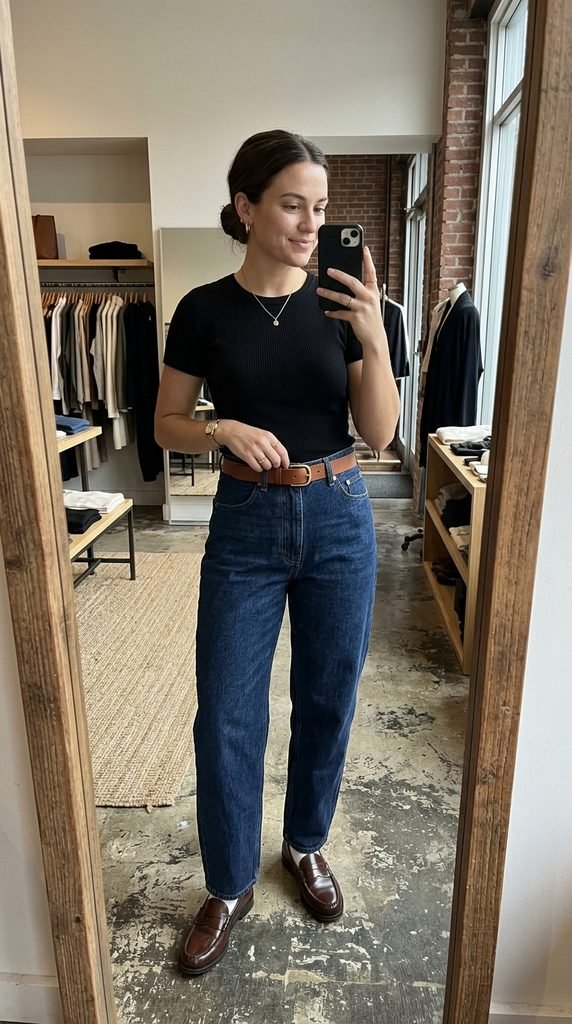
People treat belts like a backup plan for jeans that don’t fit, but on a baggy pair a visible belt actually reads as a deliberate style choice. It cinches the waist while letting the legs stay loose, which is the exact contrast that makes the fit look controlled. This breakdown of what to wear with baggy jeans covers belts alongside tops and layers.
Let a few belt loops show once the belt is on, that’s what tells people it’s a choice and not a save.
Too Baggy Looks Different in Photos Than in the Mirror
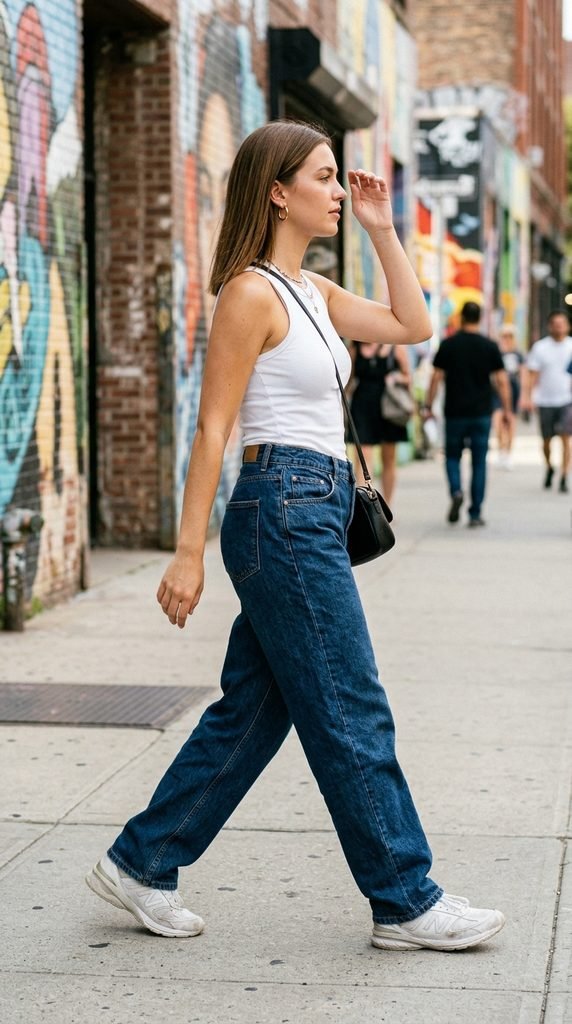
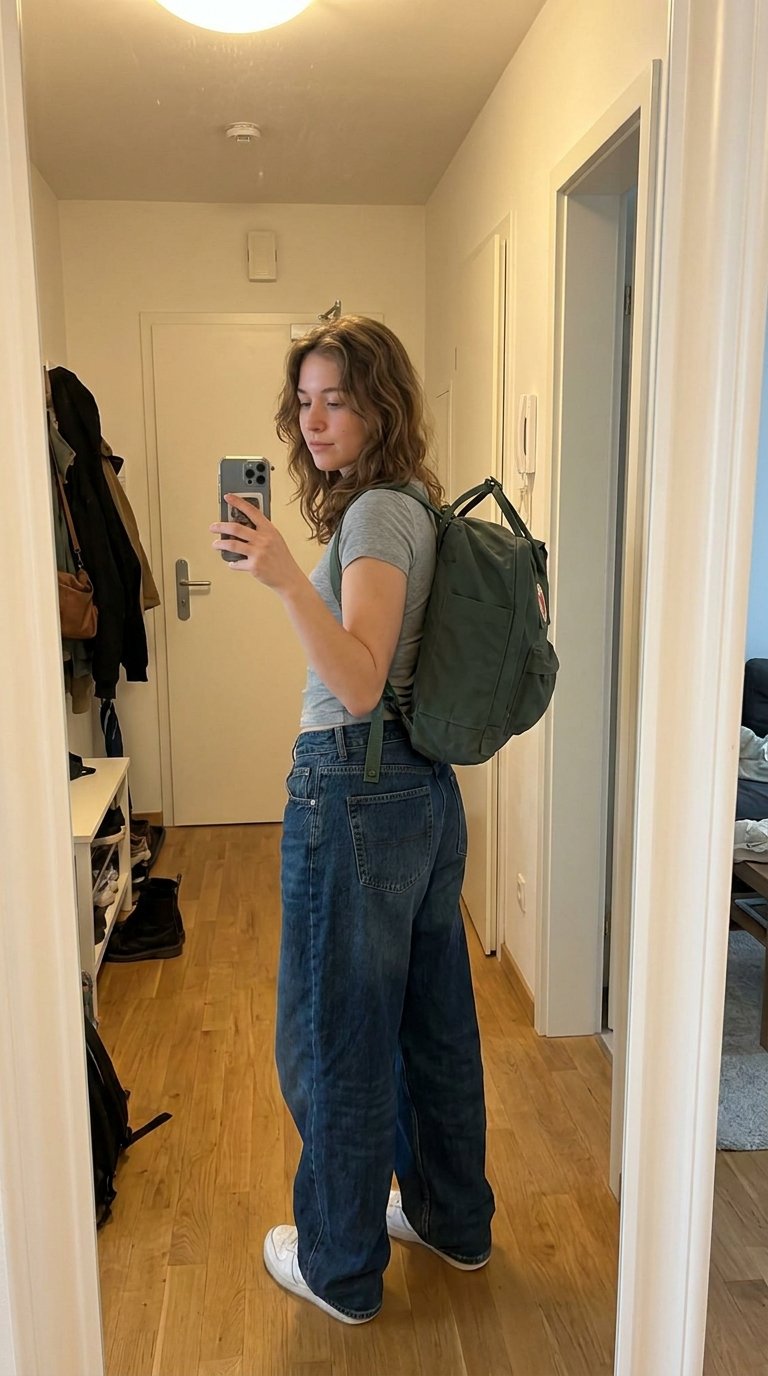
A mirror gives you one flat angle, but a camera catches the fabric moving, the fold of the hem, the way the waist sits when your arm is raised. Plenty of jeans that look fine standing still turn out swallowing in a photo taken mid stride.
Before You Buy, Check
Take the photo before you leave the store, returns are far easier than trying to guess from memory later.
Know the Difference Between Relaxed, Baggy and Oversized
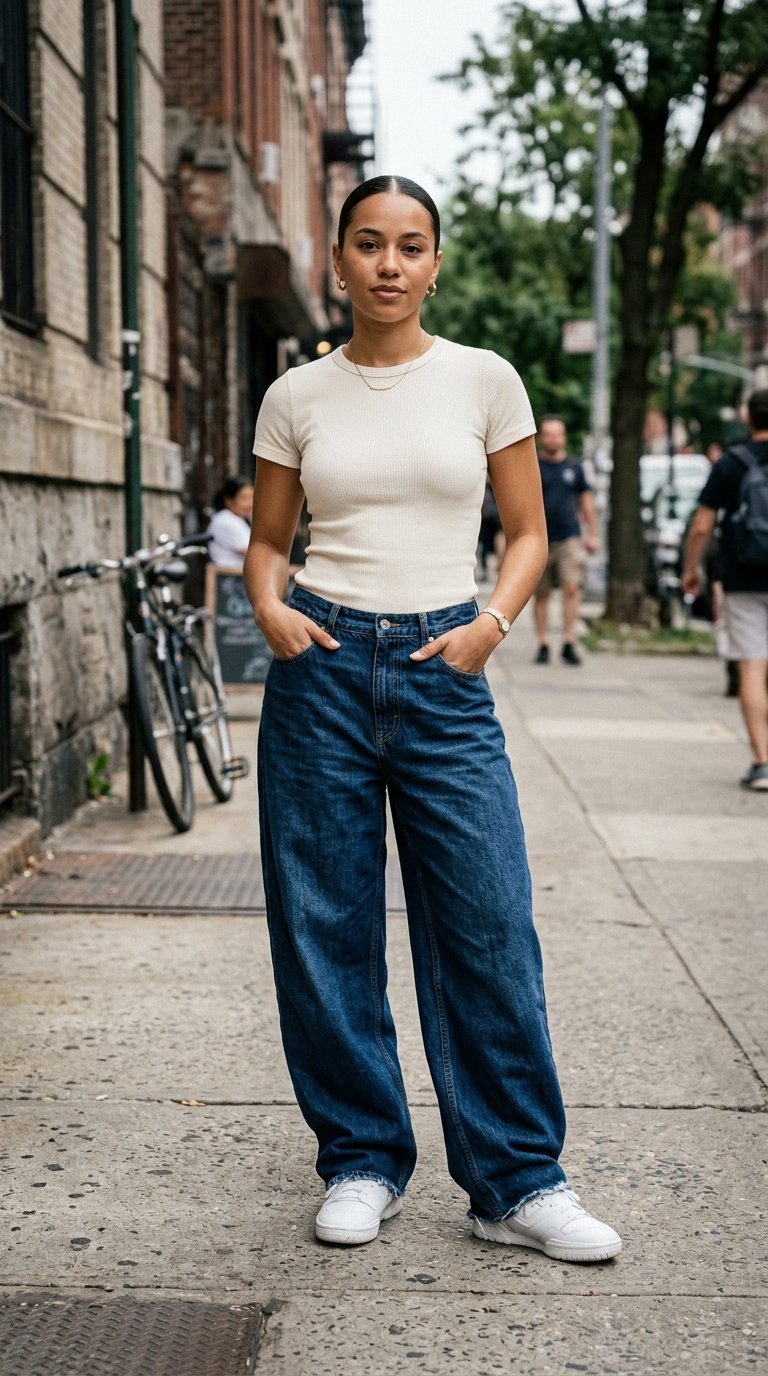
These words get used interchangeably online, but they describe different amounts of room. Relaxed has a little extra space through the thigh. Baggy adds volume from hip to hem. Oversized goes further still, often with a dropped crotch and an exaggerated leg. Knowing which one you’re actually holding saves a lot of guessing.
Look at the label description alongside the photos, not just the product name, since brands mix these terms up constantly.
Knowing how baggy is too baggy comes down to a handful of checks, the waistband, the crotch seam, the hem, and how the fabric moves when you actually sit or walk. Get those right and a loose fit reads as chosen, not accidental. If a pair fails more than one check, don’t force it, size down or move to a different cut instead. Once you’ve run through this list a few times it becomes second nature, and you’ll be able to tell a good pair from a bad one before you even try it on. Save this list for the next time you’re staring at your closet.




14 Comments